
PFinsights #34: E-commerce unfiltered; the endless bazaar that entices us

Here comes our latest PFinsight! In this edition, we’re discussing online shopping platforms and a sector of e-commerce that is evolving towards an increasingly open and fragmented model. Amazon is no longer the only major player in this sector. This latest edition reveals that 7 out of 10 consumers shop on online platforms other than Amazon. This consolidates a more diverse ecosystem in which multiple platforms coexist, each with a distinct role. We have found that the use of these platforms varies significantly by generation:
- Gen Z: strong affinity with Shein
- Millennials: combine different platforms with greater diversification
- Boomers: greater affinity with Temu and AliExpress
Beyond who shops where, what matters is understanding why. In this regard, a central idea emerges: these platforms have successfully capitalised on the concept of smart shopping. It's not just about consumption, but about optimising resources while getting a good deal on purchases.
The main driver is price, but other factors are also emerging that reinforce this sense of efficiency in shopping:
- 70% highlight lower prices
- 45% value the constant presence of promotions
- 34% point to the convenience of the platform
A key functional dimension is added to this rational logic: the breadth of the offering. These platforms compete not only on cost, but also on responsiveness. For many consumers, shopping platforms are places where they can easily find what they are looking for,… or even discover things they didn't know they wanted. It is no coincidence that 1 in 2 highlights the “variety of products” and the “possibility of accessing items not available in physical shops”.
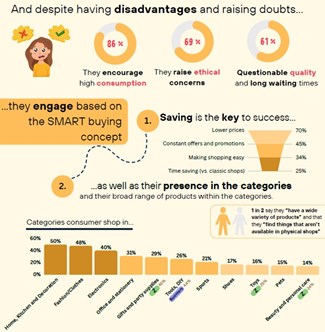
However, this growth is not without its tensions. Significant doubts persist regarding quality, delivery times or ethical issues. However, rather than curbing consumption, it seems that these frictions are taken into account when making a purchase. Consumers are aware of the trade-off and, in many cases, accept it: for 1 in 2, the value for money equation is worth it.
This logic reveals a fundamental shift. Today's consumers are not necessarily looking for the best quality or the most perfect experience. Instead, they are looking for a balance that offers them value for money. In this context, these platforms have established themselves as highly competitive, connecting with increasingly pragmatic consumers who are willing to redefine their purchasing criteria and open to fulfilling desires that were not initially part of their plan.


